

Understanding the True Potential of Your Existing Wood Surfaces

When you walk through your home in 2026, the floor beneath your feet tells a story of years of foot traffic, family gatherings, and perhaps a few accidental spills. If your wood surfaces are looking dull, scratched, or outdated, you are likely standing at a crossroads. Should you commit to Hardwood Floor Refinishing or invest in a total replacement?
Deciding between these two paths requires a deep dive into the structural integrity of your floorboards, the aesthetic goals of your interior design, and the long-term value you wish to add to your property. Hardwood is a unique asset because, unlike carpet or laminate, it possesses a renewable wear layer that can often be revitalized without the need for demolition.
In many Massachusetts homes, from the historic estates in Lexington to the modern apartments in Cambridge, the quality of the original timber is often superior to new materials available today. Understanding whether to sand down the imperfections or tear out the old planks is the first step toward a successful home renovation.
Evaluating the Condition of Your Hardwood Floor Planks
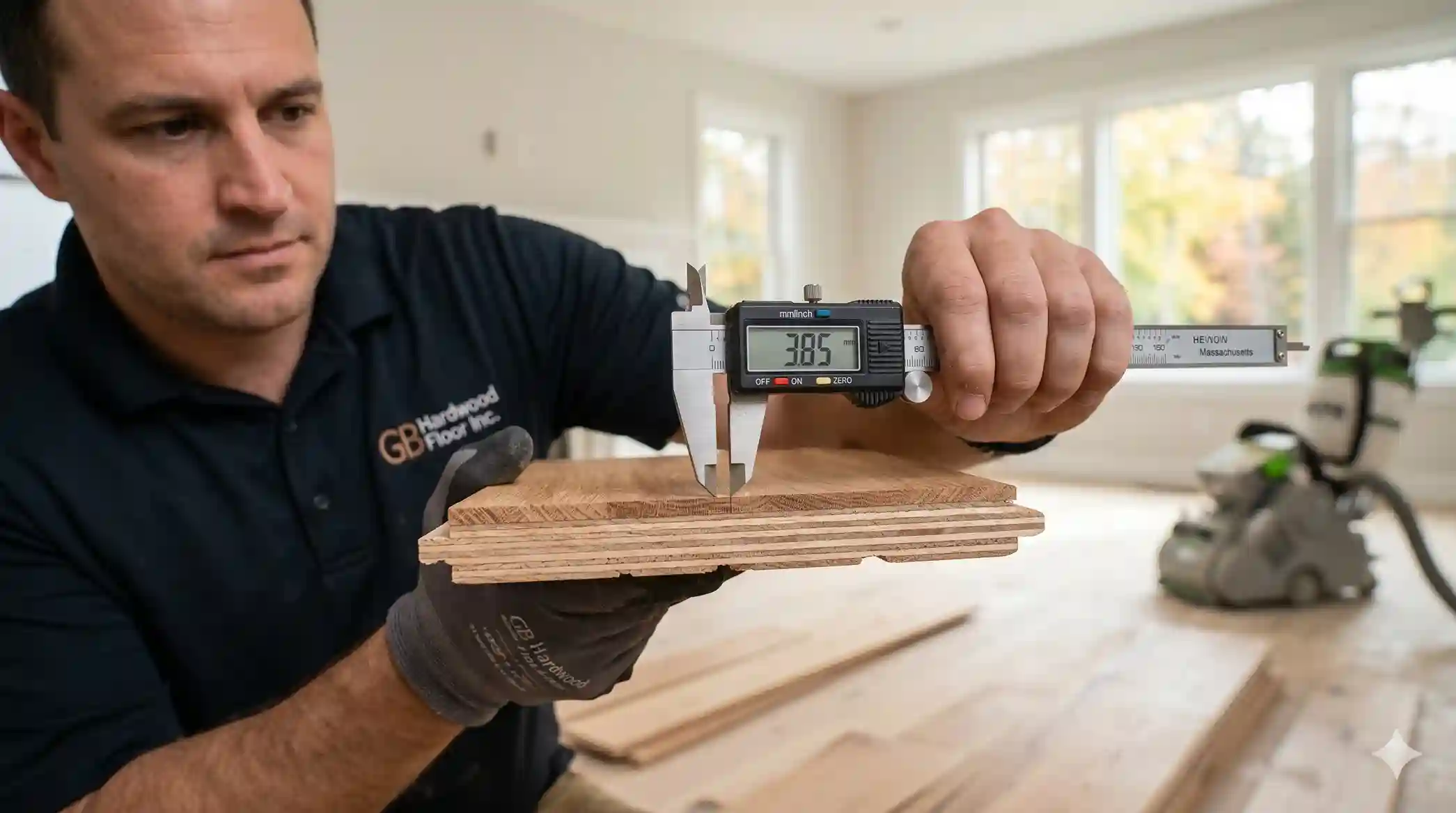
The process of choosing the right path starts with a physical inspection of your lumber species and the thickness of the remaining wood. If you can see the tongues and grooves of the planks or if the wood is paper-thin, you have reached the end of its lifespan. However, most solid wood floors can be sanded multiple times over several decades.
Deep scratches, minor water stains, and “graying” from sun exposure are typical candidates for a professional restoration. We often see homeowners who worry that a dark, outdated stain means the floor is ruined, but in reality, a professional sanding process can reveal the pristine, raw grain hidden underneath that old finish.
Structural issues, such as widespread rot, extreme warping (cupping or crowning) that doesn’t settle, or large gaps between every single board, might tip the scale toward replacement. If the foundation or subfloor has failed, simply working on the surface won’t fix the underlying instability that causes squeaks and movement.
Key Indicators for Hardwood Floor Refinishing
| Condition Factor | Refinishing Recommended | Replacement Recommended |
| Wear Layer | At least 1/8 inch of wood remains | Wood is too thin or nails are showing |
| Surface Damage | Light scratches, dullness, minor dents | Deep gouges, holes, or structural rot |
| Board Stability | Firmly attached with minimal movement | Loose, broken, or missing planks |
| Visual Goal | Change of color or sheen | Changing wood species or plank width |
| Moisture Impact | Surface staining or light cupping | Heavy mold, rot, or severe water damage |
The Structural Benefits of Choosing Restoration
Opting for restoration is more than just a cosmetic fix, it is a sustainable choice that preserves the architectural history of your home. Many older homes feature old-growth timber, which is significantly denser and more stable than the fast-growth wood commonly found in big-box stores today.
By choosing to sand and reseal, you maintain the original character of the house while utilizing modern dustless sanding technology and high-performance polyurethane finishes. This approach is significantly less invasive than a full tear-out, which involves removing baseboards, managing heavy debris, and dealing with potential subfloor work.
Professional restoration allows you to customize the final look. Whether you want a trendy matte finish for a contemporary vibe or a high-gloss traditional amber tone, the versatility of wood is its greatest strength. You can even use reactive stains or bleaching techniques to completely transform the palette of a room without changing a single board.
When a Full Floor Replacement Becomes Necessary
There are specific scenarios where even the best sanding equipment cannot save a floor. If you are dealing with engineered hardwood that has a very thin veneer, you might only get one or two sandings in its entire life. Once that top layer is gone, the plywood core is exposed, making replacement the only viable route.
Another reason to replace is if you want a fundamental change in the floor’s layout or plank width. For instance, if you currently have 2-inch strip flooring but desire 7-inch wide European Oak planks, refinishing cannot bridge that gap. Replacing the floor allows you to update the entire aesthetic to match 2026 design trends.
Severe water damage from a major leak or flood often requires a fresh start. If water has seeped into the subfloor and caused the wood to “buckle” away from the joists, the integrity of the installation is compromised. In these cases, a new installation ensures a level, quiet, and safe surface for your family.
Comparing Environmental Impact and Sustainability
Preserving your existing materials is the ultimate “green” choice for any homeowner. Hardwood takes decades to grow, and by extending the life of your current floors, you are keeping perfectly good lumber out of landfills. Refinishing consumes fewer raw materials and relies on high-quality sealants to protect the wood for another generation.
When we look at the carbon footprint of manufacturing, shipping, and installing new wood, the environmental cost is substantial. If you do choose to replace, we recommend looking for FSC-certified products or reclaimed timber to offset the environmental impact. However, if the wood is salvageable, restoring it remains the most eco-friendly renovation method available.
Modern finishes have also come a long way. In 2026, we primarily use Low-VOC (Volatile Organic Compounds) water-based finishes that are safe for pets and children. These products provide the same durability as old-school oil finishes but without the harsh odors or long drying times, making the refinishing process much more convenient.
Essential Steps in the Professional Refinishing Process
Site Preparation: Removing furniture, sealing off vents, and protecting adjacent rooms from dust.
Coarse Sanding: Removing the old finish and leveling the wood surface.
Fine Sanding: Using progressively finer grits to create a smooth, porous surface ready for stain.
Buffing: A final pass to ensure there are no swirl marks or imperfections.
Staining: Applying the chosen pigment to achieve the desired color.
Sealing: Coating the wood with multiple layers of protective finish for long-term durability.
Long-Term Maintenance and Protecting Your Investment
Whether you choose to refinish or replace, the longevity of your floors depends on how you care for them. Hardwood is a living material that reacts to humidity and temperature. In the fluctuating climate of New England, keeping your home’s internal humidity between 30% and 50% is crucial to prevent gaps or swelling.
Regular cleaning with a soft-bristle broom or a vacuum designed for hard surfaces will prevent grit from scratching the finish. Always use cleaning products specifically formulated for wood, as generic floor cleaners can leave a waxy buildup or strip the protective oils.
Placing felt pads under furniture legs and rugs in high-traffic areas, like entryways, will significantly slow down the wear and tear. If you notice the floor becoming dull after a few years, a simple screen and recoat can often bring back the shine without the need for a full sanding.
Why Expert Assessment Matters for Your Project
Attempting a DIY floor project can often lead to uneven surfaces, “drum marks,” or finish failures that are expensive to fix. A professional team brings the experience needed to identify the wood species and determine exactly how much life is left in the boards.
If you are unsure which path is right for your home, reaching out for a professional consultation is the smartest move. We can evaluate the specific needs of your property and provide a clear roadmap for your renovation.
For expert guidance and a detailed evaluation of your wood surfaces, please Contact Our Team today. Our specialists are ready to help you transform your home.
If you have questions about the best approach for your specific space, feel free to call us at (857) 540-2447 to discuss your project.
Professional Wood Floor Services Throughout Massachusetts
Deciding on the future of your flooring is easier when you work with a local partner who understands the specific architectural styles and climate challenges of our region. From the coastal humidity in Hingham to the historic renovations in Boston, we provide expert solutions tailored to each neighborhood.
Our team is dedicated to delivering high-quality craftsmanship across various communities, ensuring that every homeowner has access to durable and beautiful flooring results. If you are located in one of the areas below, explore our dedicated service pages to learn more about how we can help with your project:
- Hardwood Floor Refinishing in Westwood, MA
- Hardwood Floor Refinishing in Everett, MA
- Hardwood Floor Refinishing in Wayland, MA
- Hardwood Floor Refinishing in Cohasset, MA
- Hardwood Floor Refinishing in Newton, MA
- Hardwood Floor Refinishing in Wellesley, MA
- Hardwood Floor Refinishing in Malden, MA
- Hardwood Floor Refinishing in Weymouth, MA
- Hardwood Floor Refinishing in Medford, MA
- Hardwood Floor Refinishing in Needham, MA
- Hardwood Floor Refinishing in Cambridge, MA
- Hardwood Floor Refinishing in Dedham, MA
- Hardwood Floor Refinishing in Winchester, MA
- Hardwood Floor Refinishing in Arlington, MA
- Hardwood Floor Refinishing in Belmont, MA
- Hardwood Floor Refinishing in Boston, MA
- Hardwood Floor Refinishing in Brookline, MA
- Hardwood Floor Refinishing in Canton, MA
- Hardwood Floor Refinishing in Chelsea, MA
- Hardwood Floor Refinishing in Dover, MA
- Hardwood Floor Refinishing in Hingham, MA
- Hardwood Floor Refinishing in Lexington, MA
- Hardwood Floor Refinishing in Medfield, MA
- Hardwood Floor Refinishing in Milton, MA
- Hardwood Floor Refinishing in Norwood, MA
- Hardwood Floor Refinishing in Quincy, MA
- Hardwood Floor Refinishing in Randolph, MA
- Hardwood Floor Refinishing in Revere, MA
- Hardwood Floor Refinishing in Somerville, MA
- Hardwood Floor Refinishing in Waltham, MA
- Hardwood Floor Refinishing in Watertown, MA
- Hardwood Floor Refinishing in Weston, MA
- Hardwood Floor Refinishing in Winthrop, MA