

Understanding the Core Differences in Modern Synthetic Flooring
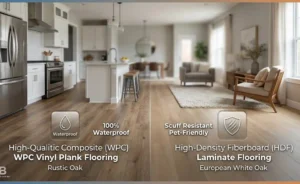
Choosing between Vinyl Plank Flooring and laminate has become a complex decision for homeowners in 2026, especially as manufacturing technologies have blurred the lines between these two popular materials. While both offer a wood-look aesthetic, their internal composition dictates how they perform under daily stress, moisture, and long-term wear.
Vinyl Plank Flooring, often referred to as LVP (Luxury Vinyl Plank), is essentially a multi-layered synthetic product designed to mimic natural hardwood while providing superior resistance to environmental factors. It is composed primarily of polyvinyl chloride resins, which grant it a unique flexibility and resilience that laminate often struggles to match in high-traffic areas.
Laminate flooring, on the other hand, utilizes a core of high-density fiberboard made from recycled wood particles. This organic base makes it feel more like real wood underfoot but also introduces vulnerabilities to humidity and direct water contact. Understanding these fundamental building blocks is the first step in determining which surface will protect your home investment.
When we analyze durability, we aren’t just looking at scratches. We are looking at structural integrity over a decade or more. For those living in the humid climates of the Massachusetts coast, the choice between a plastic-based core and a wood-based core can be the difference between a pristine floor and a warped, bubbling mess.
The Evolution of Luxury Vinyl Plank (LVP) Technology
In recent years, the shift toward Stone Plastic Composite (SPC) and Wood Plastic Composite (WPC) has revolutionized the industry. These advanced iterations of Vinyl Plank Flooring offer a rigid core that eliminates the telegraphing of subfloor imperfections, a common issue in older, thinner vinyl products.
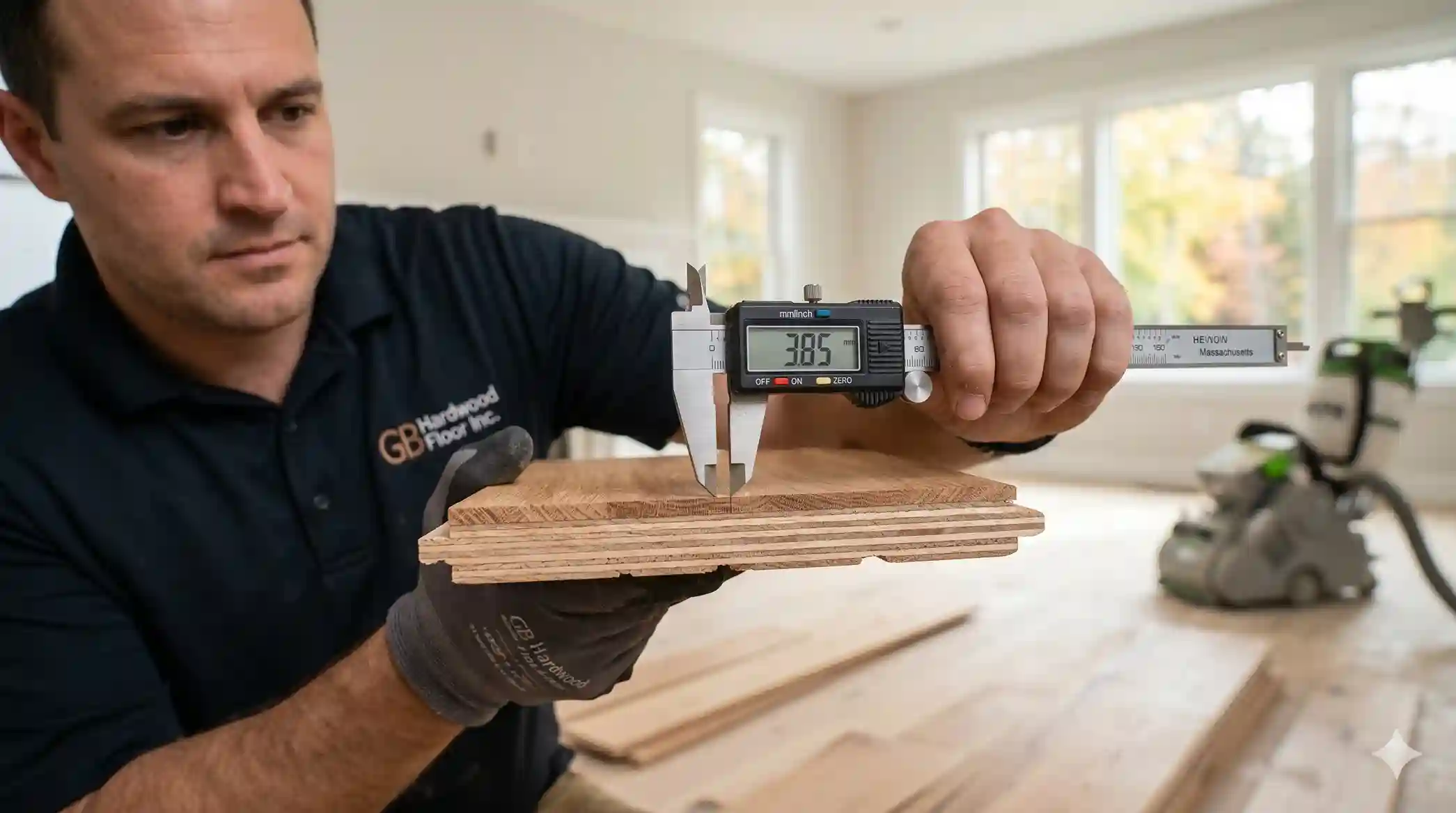
The wear layer is the unsung hero of vinyl. In 2026, premium products feature ceramic bead coatings and enhanced UV inhibitors. These technical specifications ensure that the vibrant oak or hickory patterns do not fade under the intense afternoon sun streaming through your living room windows.
Why Material Composition Matters for Your Home
The “why” behind choosing one over the other often boils down to the specific room’s micro-environment. A basement, for instance, has different requirements than a second-story bedroom. Vinyl Plank Flooring excels in subterranean spaces because it is non-porous and does not support the growth of mold or mildew when exposed to concrete moisture.
Laminate has made strides with “water-resistant” labels, but it remains a topical protection rather than an inherent quality of the material. If a pipe leaks or a pet has an accident that goes unnoticed for hours, the fiberboard core of laminate will eventually swell, leading to irreversible damage that requires full plank replacement.
Durability Analysis: Comparing Lifespan and Resilience
Durability is a multifaceted metric involving impact resistance, scratch protection, and dimensional stability. When comparing Vinyl Plank Flooring to laminate, we must look at the AC (Abrasion Class) ratings for laminate and the mil-thickness of the wear layer for vinyl to get an accurate picture of performance.
Vinyl Plank Flooring is generally considered more resilient against heavy impacts. Because it is a softer material than the resin-infused surface of laminate, it has a slight “give” that prevents cracking if a heavy object is dropped. This makes it an ideal candidate for busy kitchens where heavy cookware might take a tumble.
Laminate is exceptionally hard, which makes it highly resistant to micro-scratches from pet claws. However, this hardness comes with brittleness. If the surface is chipped, the underlying light-colored wood grain is exposed, making the damage highly visible and difficult to repair without specialized kits or board replacement.
Scratch Resistance and Surface Protection
The protective coating on Vinyl Plank Flooring is measured in mils, which are thousandths of an inch. For a residential setting with high activity, a 20-mil wear layer is the standard for 2026, providing a robust barrier against the friction of moving furniture and the frantic pace of household pets.
Laminate uses a wear layer made of aluminum oxide. This creates a surface that is incredibly difficult to dull. While vinyl is tough, it can be susceptible to “scuffing” from rubber-soled shoes or heavy furniture dragging, whereas laminate maintains its high-gloss or matte sheen with more consistency over time.
Dimensional Stability in Variable Climates
One of the most significant advantages of Vinyl Plank Flooring is its dimensional stability. Unlike wood-based products, vinyl does not expand or contract significantly with changes in humidity. This is crucial for homeowners in areas like New England, where winters are dry and summers are notoriously humid.
Laminate requires expansion gaps at every wall and transition. If these gaps are not perfectly calculated during installation, the floor can “peak” or “gap,” creating unsightly ridges. Vinyl, especially the rigid core varieties, remains much more settled, providing a seamless look across large open-concept floor plans.
| Feature | Vinyl Plank Flooring (LVP/SPC) | Laminate Flooring |
| Core Material | PVC / Stone Composite | High-Density Fiberboard (Wood) |
| Water Resistance | 100% Waterproof | Water-Resistant (Topical) |
| Best For | Kitchens, Bathrooms, Basements | Bedrooms, Dining Rooms |
| Installation | Click-lock, Glue-down, Loose-lay | Click-lock (Floating) |
| Sound Profile | Quiet and Muffled | Often “Hollow” sounding |
| Lifespan | 20 to 50 Years | 15 to 25 Years |
Cost Analysis: Initial Investment vs. Long-Term Value
When evaluating the cost of Vinyl Plank Flooring versus laminate, it is essential to look beyond the price tag at the retail store. A comprehensive approach reveals that the true cost involves preparation, labor, underlayment, and the eventual need for replacement.
Generally, high-quality Vinyl Plank Flooring carries a slightly higher initial purchase price than entry-level laminate. However, because vinyl does not always require a separate underlayment, as many modern planks come with pre-attached acoustic pads, the “all-in” material cost often levels out.
Labor costs are comparable for both, as they both utilize the “click-lock” or “floating floor” installation method. However, Vinyl Plank Flooring is often easier to cut, requiring only a utility knife to score and snap, which can lead to faster installation times and less waste compared to the saws required for laminate.
Maintenance Costs Over Time
The maintenance profile of Vinyl Plank Flooring is remarkably low. Because it is waterproof, you can use a traditional wet mop or even a steam mop on certain rigid core models without fear of damaging the joints. This eliminates the need for specialized “dry-mop only” cleaners that are often required to preserve the life of a laminate floor.
Laminate requires careful attention. If a cleaner is too acidic or if too much water is used, the moisture can seep into the seams, causing the edges to lift. Over a decade, the cost of specialized cleaning products and the potential for premature replacement of damaged boards can make laminate a more expensive choice.
ROI and Resale Value in 2026
In the 2026 real estate market, Vinyl Plank Flooring has surpassed laminate in terms of perceived value by buyers. The “waterproof” tag is a massive selling point that provides peace of mind to new homeowners. When a kitchen features high-end LVP, it is viewed as a durable, modern upgrade.
Laminate still holds value in “dry” rooms like bedrooms or home offices, where its realistic wood texture is highly appreciated. However, if you are looking for a floor that provides the best return on investment by being applicable to every room in the house, vinyl is the clear winner for maintaining a cohesive and valuable aesthetic.
Installation Complexity: DIY vs. Professional Help
The ease of installation is a major factor for many. Both materials are DIY-friendly, but Vinyl Plank Flooring offers more versatility in terms of the subfloor it can be laid over. Because vinyl is thinner and more flexible, it can often be installed over existing tile or linoleum without significantly raising the floor height.
Laminate is thicker, usually ranging from 8mm to 12mm. This thickness requires a very flat subfloor. Any dips or humps in the subfloor will cause the laminate to “flex” when walked upon, which eventually breaks the tongue-and-groove locking mechanism, leading to floor failure.
Tools and Preparation Requirements
For a Vinyl Plank Flooring project, you need minimal tools: a tape measure, a utility knife, a tapping block, and a rubber mallet. The lack of power saws means less dust in your home, making the installation process much cleaner and safer for families with respiratory sensitivities.
Laminate installation is a “woodworking” project. You will need a miter saw or a circular saw to make cuts. This creates fine wood dust that requires extensive cleanup and proper ventilation. Additionally, the need for a dedicated moisture barrier over concrete is non-negotiable for laminate, adding another step to the preparation process.
Subfloor Condition and Leveling
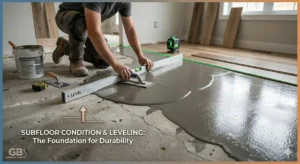
The success of your new floor depends on what lies beneath. Vinyl Plank Flooring (specifically SPC) is incredibly forgiving of minor subfloor imperfections. Its rigid core bridges small gaps and cracks in concrete. However, if the subfloor is very uneven, vinyl can “telegraph” those bumps over time if you choose a thinner, flexible variety.
Laminate acts as a bridge. It creates a solid, unified surface that feels very firm. If you have a subfloor that is structurally sound but has minor texture issues, the thickness of laminate can mask those better than a thin vinyl sheet, though it cannot compensate for a subfloor that is out of level.
Environmental Impact and Sustainability
As we move through 2026, sustainability has become a primary concern for the conscious consumer. The environmental footprints of Vinyl Plank Flooring and laminate are quite different, and the “better” choice depends on your specific green priorities.
Laminate is often praised for its use of recycled wood content. The core is made of sawdust and wood chips that might otherwise end up in a landfill. However, the resins used to bind these particles sometimes contain formaldehyde, although most modern manufacturers have moved toward low-VOC (Volatile Organic Compound) certifications.
The Recyclability of Vinyl Products
Vinyl Plank Flooring was historically criticized for being a petroleum-based product. However, the industry has made massive leaps. Many LVP products in 2026 are made with recycled plastics and are themselves 100% recyclable at the end of their lifespan, contributing to a circular economy in the construction industry.
Furthermore, the longevity of vinyl contributes to its sustainability. A floor that lasts 30 years before needing replacement is inherently more eco-friendly than a floor that needs to be ripped out and replaced after 12 years due to water damage or wear.
Indoor Air Quality and VOCs
Both materials have improved significantly regarding indoor air quality. When shopping for Vinyl Plank Flooring, look for the FloorScore certification. This ensures that the product meets strict standards for indoor air emissions, protecting your family from chemical off-gassing.
Laminate also offers “GreenGuard Gold” certified options. Because it contains wood, it is important to ensure the product is sourced from sustainably managed forests (FSC certified). In the comparison of breathability, neither material “breathes” like natural wood, but they both provide a hypoallergenic surface that doesn’t trap dust like carpet.
Room-by-Room Recommendation Guide
To help you decide where to deploy your budget, it is helpful to look at the specific demands of each area in your home. Vinyl Plank Flooring is the “utility player” of the flooring world, capable of handling almost any environment, but laminate still has its niche.
In the kitchen and laundry room, there is no contest. The frequency of spills and the potential for appliance leaks make Vinyl Plank Flooring the only logical choice. A dishwasher leak that goes unnoticed under the cabinets would ruin a laminate floor in hours, whereas vinyl remains unaffected.
The Best Choice for Living Areas and Bedrooms
In primary living areas, the choice is more subjective. If you prefer a floor that feels warmer and sounds more like traditional hardwood, laminate’s wood-based core provides a natural insulation and a familiar “clack” when walked on. It feels less like plastic and more like organic material.
However, if you have an open-concept home where the kitchen flows directly into the living room, using Vinyl Plank Flooring throughout the entire space creates a visual continuity that makes the home feel larger. It eliminates the need for transition strips, which can be a tripping hazard and a visual break in the design.
Bathrooms and Basements: The Vinyl Stronghold
Bathrooms are high-moisture zones. Steam from showers and splashes from the tub will eventually find their way into the seams of any floor. Vinyl Plank Flooring handles this with ease. Even if water sits on the surface, it cannot penetrate the waterproof core.
Basements are prone to “wicking” moisture through the concrete slab. Laminate is highly discouraged in basements unless a complex and expensive subfloor system is installed first. Vinyl planks can be laid directly over a vapor barrier on concrete, making it the most cost-effective and durable basement solution.
Aesthetic Trends and Design Options in 2026
The visual quality of both materials is staggering. High-definition printing technology allows manufacturers to replicate the look of reclaimed barn wood, European white oak, and even natural stone or marble.
Vinyl Plank Flooring often features “Embossed in Register” (EIR) textures. This means the physical texture of the plank matches the visual grain of the wood print. When you see a knot in the wood pattern, you can actually feel it with your hand. This level of realism makes it difficult for even experts to distinguish LVP from real wood at a glance.
Color Palettes and Textures
In 2026, we are seeing a move toward warmer tones and “greige” (a mix of gray and beige). Both Vinyl Plank Flooring and laminate offer these trendy colors. Vinyl has an advantage in texture variety, as it can also mimic the cool, smooth feel of slate or the rugged texture of concrete for industrial-style lofts.
Laminate tends to stay within the wood-look realm. It excels at mimicking the long, wide planks that are currently in high demand. Because laminate is more rigid, it can be manufactured in longer boards without the risk of bowing, providing a very upscale, “custom” look to large rooms.
Light Reflection and Sheen Levels
The sheen of your floor affects how much dust and pet hair is visible. Matte finishes are currently the most popular choice for Vinyl Plank Flooring because they hide smudges and footprints exceptionally well. Laminate often has a slightly higher natural luster due to its resin coating, which can highlight dust if not cleaned frequently.
Making the Final Decision: A Summary of Benefits
When we weigh all factors, Vinyl Plank Flooring emerges as the more versatile and “future-proof” option for the modern home in 2026. Its ability to withstand water, resist heavy impacts, and provide a low-maintenance surface for decades makes it the gold standard for high-performance flooring. While laminate remains a contender for specific “dry” areas, the peace of mind offered by a completely waterproof solution is a superior investment for the vast majority of homeowners.
To ensure your new floor handles the chaos of a busy household and remains pristine for years, we focus on:
Waterproof Security: Vinyl Plank is the definitive solution for kitchen mishaps and wet paws, providing a non-porous barrier that prevents the warping and swelling common in wood-based laminate products.
Structural Durability: We prioritize materials with elite wear layers that resist heavy impacts and scratches, ensuring your floor looks as good in ten years as it does the day it is installed.
Architectural Integration: At GB Hardwood Floor Inc, we specialize in helping you navigate these technical choices to find the perfect fit for your specific lifestyle and home architecture, ensuring a flawless professional installation.
Ready to transform your home with a floor that combines aesthetic beauty with extreme durability? Contact GB Hardwood Floor Inc today for a personalized consultation and request your free estimate, or call our team of experts directly at: (857) 540-2447
Expert Vinyl Plank Flooring Services Near You
Choosing a specialist ensures your investment is protected by proper subfloor preparation and precision installation techniques. GB Hardwood Floor Inc is ready to guide you through the selection of the latest 2026 collections across Massachusetts.
Explore our dedicated service pages to learn more about our professional solutions in your community:
- Vinyl Plank Flooring in Cambridge, MA
- Vinyl Plank Flooring in Watertown, MA
- Vinyl Plank Flooring in Wayland, MA
- Vinyl Plank Flooring in Wellesley, MA
- Vinyl Plank Flooring in Medfield, MA
- Vinyl Plank Flooring in Hingham, MA
- Vinyl Plank Flooring in Somerville, MA
- Vinyl Plank Flooring in Norwood, MA
- Vinyl Plank Flooring in Waltham, MA
- Vinyl Plank Flooring in Dover, MA
- Vinyl Plank Flooring in Dedham, MA
- Vinyl Plank Flooring in Arlington, MA
- Vinyl Plank Flooring in Belmont, MA
- Vinyl Plank Flooring in Boston, MA
- Vinyl Plank Flooring in Brookline, MA
- Vinyl Plank Flooring in Canton, MA
- Vinyl Plank Flooring in Chelsea, MA
- Vinyl Plank Flooring in Cohasset, MA
- Vinyl Plank Flooring in Everett, MA
- Vinyl Plank Flooring in Lexington, MA
- Vinyl Plank Flooring in Malden, MA
- Vinyl Plank Flooring in Medford, MA
- Vinyl Plank Flooring in Milton, MA
- Vinyl Plank Flooring in Needham, MA
- Vinyl Plank Flooring in Newton, MA
- Vinyl Plank Flooring in Quincy, MA
- Vinyl Plank Flooring in Randolph, MA
- Vinyl Plank Flooring in Revere, MA
- Vinyl Plank Flooring in Weston, MA
- Vinyl Plank Flooring in Westwood, MA
- Vinyl Plank Flooring in Weymouth, MA
- Vinyl Plank Flooring in Winchester, MA
- Vinyl Plank Flooring in Winthrop, MA