

What Boston Homeowners Should Know Before Pricing a Refinish
Roughly two out of three homes in Boston’s older neighborhoods still sit on original solid wood, much of it red oak laid before 1940. That wood is worth saving, but decades of foot traffic, radiator heat, and humidity swings leave their mark. Pricing a refinish is not one flat number, it depends on what your floor has been through and what it needs now.
This guide breaks down exactly what drives the cost of hardwood floor refinishing, how the process changes the total, and when the investment makes sense for your home.

The Main Factors That Drive Refinishing Costs
The single biggest cost driver is square footage, but it rarely tells the whole story. Two rooms of the same size can carry very different estimates once you account for the floor’s condition, the finish you choose, and how much prep the space needs before a sander ever touches wood.
Access matters more than people expect. A third-floor unit in a triple-decker with no elevator takes longer to load and stage than a ground-floor condo. That labor shows up in the total.
Here are the variables that shift a written estimate most often:
- Total square footage and the number of separate rooms or closets involved.
- Floor condition, including deep gouges, pet stains, cupping, or previous water damage.
- Finish type, since oil-based, water-based, and hardwax finishes carry different material and labor demands.
- Board replacement for cracked or missing planks.
- Stairs and detail work, which are sanded largely by hand.
One of the most common mistakes we see is homeowners pricing only the open floor and forgetting closets, thresholds, and stairs. It looks fine on paper, then the real scope adds a full day of hand-sanding nobody budgeted for. A walkthrough catches that early. Owners planning Hardwood Floor Refinishing in Newton, MA or Hardwood Floor Refinishing in Wellesley, MA often have larger footprints with detailed staircases, which is why an on-site look beats a phone quote.
How the Refinishing Process Shapes Your Final Price
Refinishing is a sequence, and each stage adds to labor. Understanding the steps helps you read an estimate and spot where a low bid may be cutting corners.
The work generally moves through sanding, edging, buffing, staining if you want a color change, and multiple finish coats. The number of coats and the drying time between them is where the schedule and the price both grow.
Why Sanding Quality Separates Good Work From Bad
The sanding sequence needs to move through progressively finer grits without skipping steps. Rushing that step leaves sanding scratches that only appear after the finish goes on, when it is expensive to fix. Proper edging along baseboards also takes time because the large drum sander cannot reach the perimeter.
The Role of Drying and Cure Time
Finish coats need real time to cure, not just dry to the touch. In Boston’s humid summers, a floor near the harbor can hold moisture that slows an oil-based coat considerably. Pushing furniture back too soon presses grit into a soft finish and dulls it. Crews handling Hardwood Floor Refinishing in Boston, MA and coastal areas like Hardwood Floor Refinishing in Weymouth, MA plan around that humidity rather than fighting it.
Wood Species, Condition, and Materials That Move the Estimate
Not all floors sand the same way. Red oak, the default in most Boston row houses, refinishes predictably. Harder or softer species change both the labor and the outcome, and that feeds into cost.
Old-growth pine, common in homes across Hardwood Floor Refinishing in Dedham, MA and older parts of Hardwood Floor Refinishing in Dover, MA, is soft and dents easily, so it demands a lighter touch and careful grit selection. Maple is dense and shows stain unevenly. Each species behaves differently under the sander and under color.
Condition Issues That Add Labor
Water rings, pet damage, and cupped boards all mean extra prep. Cupping from moisture underneath sometimes needs to be addressed before sanding, or the floor will re-cup after the finish goes on. Homeowners often ask whether black pet stains sand out. The honest answer is usually no, because urine penetrates deep into the grain, and those boards typically need replacing or blending.
Finish choice also affects the material line. A durable commercial-grade water-based system costs more per coat than a basic product but wears far better in high-traffic condos around Hardwood Floor Refinishing in Cambridge, MA and Hardwood Floor Refinishing in Chelsea, MA.
Dust-Free Sanding Compared to Traditional Refinishing
How a crew manages dust affects both your experience and the price. Containment systems that attach to the sander pull most debris into sealed bags instead of leaving it airborne. That convenience carries a modest premium, but for occupied homes it often pays off.
In multi-family buildings across Hardwood Floor Refinishing in Everett, MA, Hardwood Floor Refinishing in Malden, MA, and Hardwood Floor Refinishing in Medford, MA, dust drifting into neighboring units causes real friction. Containment keeps the mess local. Here is how the two approaches compare.
| Factor | Traditional Sanding | Dust-Containment Sanding |
|---|---|---|
| Airborne dust | Heavy, settles across the home | Greatly reduced at the source |
| Cleanup time | Longer, room by room | Shorter |
| Best for | Vacant homes | Occupied condos and multi-unit buildings |
| Relative cost | Lower material overhead | Slightly higher |
| Air quality during work | Noticeably affected | Much cleaner |
No system is fully dust free despite the marketing name, so we still tape off vents and doorways. In dense areas like Hardwood Floor Refinishing in Winchester, MA and Hardwood Floor Refinishing in Arlington, MA, containment is usually the sensible default when families stay home.

When Refinishing Is Worth It Versus Full Replacement
Refinishing almost always costs less than tearing out and installing new wood, but it only works if enough solid material remains above the tongue and groove. That is the real decision point, not age.
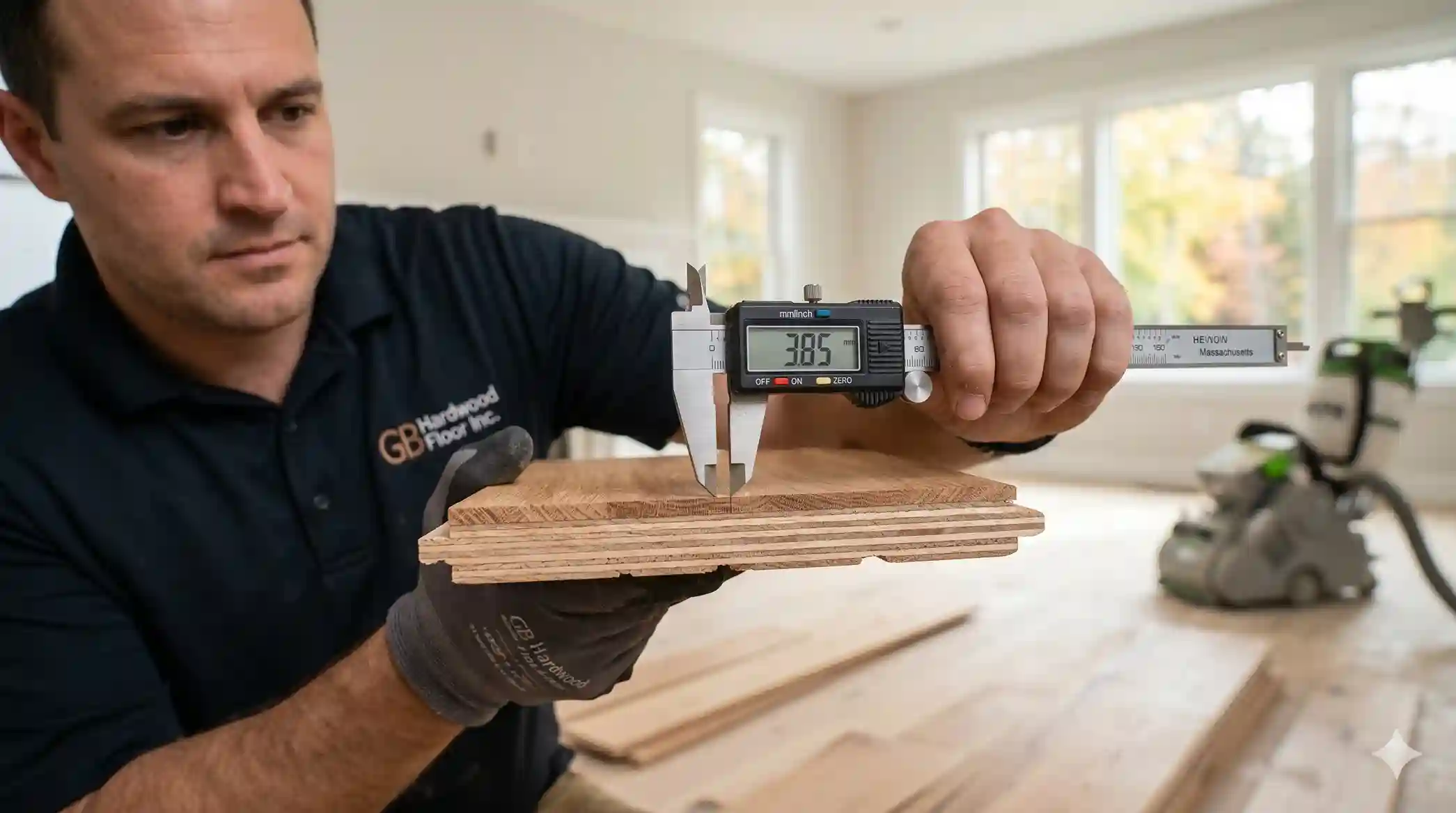
A solid floor can typically be sanded several times across its life. If yours has already been refinished repeatedly, the boards may be too thin for another pass. We check thickness at a threshold or heating register before recommending anything.
- Refinish when boards are solid, thick enough, and structurally sound despite surface wear.
- Replace boards and refinish when a handful of damaged planks can be swapped and blended into the field.
- Replace when the wood is worn past its wear layer, is engineered with a thin veneer, or has widespread rot.
In older homes around Hardwood Floor Refinishing in Wayland, MA, Hardwood Floor Refinishing in Cohasset, MA, and Hardwood Floor Refinishing in Needham, MA, original floors are frequently thick enough for another refinish, which makes saving them the clear value. Belmont and Brookline properties tell the same story. Homes near Hardwood Floor Refinishing in Belmont, MA, Hardwood Floor Refinishing in Brookline, MA, and Hardwood Floor Refinishing in Canton, MA often hold heritage oak that is worth restoring rather than discarding.
How to Get an Accurate Refinishing Estimate
A trustworthy estimate starts with someone standing on your actual floor. Phone quotes and online calculators guess at condition, and condition is where the money lives. A proper visit measures the space, tests board thickness, and identifies prep work before a number is written.
Ask any contractor how many finish coats are included, which product they use, and how they handle dust. Vague answers are a warning sign. A detailed written scope protects you from surprise add-ons midway through the job.
Regional timing matters too. Late spring through early fall brings the humidity that lengthens cure times across the Boston area, so scheduling with realistic drying windows prevents rushed finishes. A crew that builds that into the plan is one that has done this work through many New England seasons, whether the project is a compact condo or a full home in Hardwood Floor Refinishing in Westwood, MA.
FAQ: Common Questions About Hardwood Refinishing Costs
How long does hardwood floor refinishing take in a Boston home?
Most single rooms take two to four days, and a full floor of a triple-decker unit runs closer to a week. Sanding happens quickly, but the finish drives the timeline. Oil-based coats need longer to cure between passes, while water-based products let you walk sooner. Humid Boston summers slow drying, so we build extra cure time into the schedule.
Can old pine or oak floors always be refinished?
Not always. The deciding factor is how much solid wood sits above the tongue and groove. Floors sanded several times over the decades may be too thin for another pass. We check board thickness at floor registers or thresholds first. If enough wood remains, refinishing is almost always the better value than replacement.
Does refinishing create a lot of dust in the house?
Traditional sanding produces fine dust that settles everywhere. Dust-containment systems capture most of it at the sander, which matters in occupied condos and multi-unit buildings around Cambridge and Somerville. No system is fully dust free, so we still seal doorways and vents. The difference in cleanup and air quality is significant for families staying home during the work.
Is refinishing worth it before selling a Boston home?
In most cases, yes. Buyers in neighborhoods like Brookline and Newton expect original wood floors to look cared for, and refreshed floors photograph well for listings. Refinishing usually returns more than it costs at resale because it signals the home was maintained. Full replacement rarely makes sense purely for a sale.
Key Takeaways on Refinishing Costs in the Boston Area
Refinishing costs are driven by condition, finish choice, and access far more than by a flat per-foot rate. A thin, badly stained floor with detailed stairs will always price higher than an open room of solid oak in good shape.
The smart move is to protect the wood you already have. Most original Boston floors are thick enough for another refinish, which makes restoration the better value against replacement in the vast majority of homes we walk.
Get a real look at your floor, ask about coats and dust handling, and plan around the season. Those three habits keep the estimate honest and the result durable.
Schedule Your Free Refinishing Estimate Today
If your floors are looking dull, scratched, or graying at the traffic paths, that surface wear is your finish giving out, and waiting lets grit reach the bare wood where damage gets permanent. Acting now often means a straightforward refinish instead of costly board replacement later.
Call us today at (857) 540-2447 and we will schedule a visit to look at your actual floor, test the board thickness, tell you exactly what it needs, and hand you a written estimate with no guesswork.
The visit takes under an hour, carries no obligation, and costs nothing. Get in touch with our team to lock in a time that works for you.
Find Trusted Hardwood Floor Refinishing Near You in Massachusetts
We restore original and newer wood floors across Greater Boston, from tight city condos to full family homes in the suburbs. Our crews know how local housing eras, humidity, and multi-unit buildings shape every project. Find your community below to see how we serve your neighborhood.
- Hardwood Floor Refinishing in Westwood, MA
- Hardwood Floor Refinishing in Everett, MA
- Hardwood Floor Refinishing in Wayland, MA
- Hardwood Floor Refinishing in Cohasset, MA
- Hardwood Floor Refinishing in Newton, MA
- Hardwood Floor Refinishing in Wellesley, MA
- Hardwood Floor Refinishing in Malden, MA
- Hardwood Floor Refinishing in Weymouth, MA
- Hardwood Floor Refinishing in Medford, MA
- Hardwood Floor Refinishing in Needham, MA
- Hardwood Floor Refinishing in Cambridge, MA
- Hardwood Floor Refinishing in Dedham, MA
- Hardwood Floor Refinishing in Winchester, MA
- Hardwood Floor Refinishing in Arlington, MA
- Hardwood Floor Refinishing in Belmont, MA
- Hardwood Floor Refinishing in Boston, MA
- Hardwood Floor Refinishing in Brookline, MA
- Hardwood Floor Refinishing in Canton, MA
- Hardwood Floor Refinishing in Chelsea, MA
- Hardwood Floor Refinishing in Dover, MA