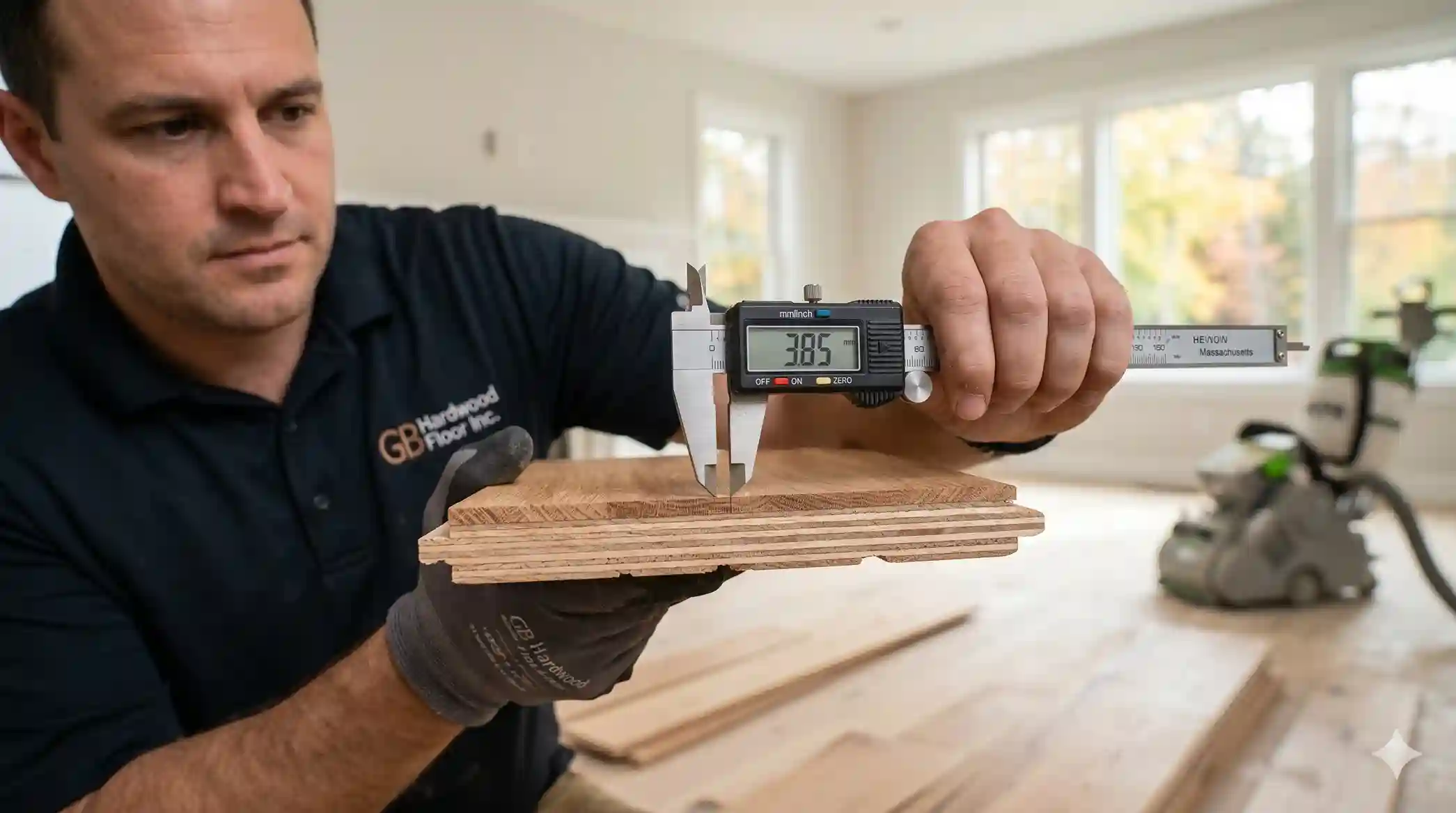


Why the Finish Decides How Your Floor Looks and Lasts
A hardwood floor’s finish is only a few thousandths of an inch thick, yet it decides how the wood looks and how long it survives daily traffic. In Boston, where triple-deckers and Back Bay brownstones often sit on original oak or maple, the choice matters more because of humidity swings between winter heating and humid summers. This guide breaks down the main hardwood floor finishes, how each one performs, the sheen options, and how to pick the right one for your home.

What a Hardwood Floor Finish Actually Does
A wood finish is the protective coating that sits on or inside the surface of the boards. It shields the wood from moisture, foot traffic, spills, and UV fading. Without it, bare oak or maple would absorb water, stain quickly, and wear unevenly within months.
There are two broad families. Surface finishes form a hard film on top of the wood, like polyurethane. Penetrating finishes soak into the grain and harden inside the wood, like natural oils. Each behaves differently when it comes to touch-ups, feel underfoot, and long-term maintenance.
The finish is also the last step of any quality hardwood floor installation, and it is where many projects either shine or fail. One of the most common mistakes we see is a beautiful sanding job sealed with a rushed topcoat. It looks fine for a season, then the film starts to peel at the edges because the wood was not fully dry or clean before coating.
Oil-Based vs Water-Based Polyurethane: The Core Comparison
Most homeowners end up choosing between two surface finishes: oil-based polyurethane and water-based polyurethane. Both create a durable film, but they differ in color, dry time, odor, and how they age.
Oil-based polyurethane adds a warm amber tone that continues to deepen over the years. It costs less per coat and builds thickness quickly, but it dries slowly and gives off strong fumes. Water-based polyurethane dries fast, stays clear, and has low odor, which is why it has become popular in occupied homes across Cambridge and Somerville where families cannot vacate for a week.
| Factor | Oil-Based Polyurethane | Water-Based Polyurethane |
|---|---|---|
| Color tone | Warm amber, deepens over time | Clear, shows natural wood |
| Dry time between coats | Slow, often overnight | Fast, a few hours |
| Full cure | 2 to 3 weeks | About 1 week |
| Odor and fumes | Strong | Low |
| Durability | High | High, commercial grades excel |
The technical detail that separates good work from bad here is timing between coats. Water-based coats need the surface to reach the right dryness, not just feel dry to the hand. Rushing that step traps moisture and leaves a cloudy, soft film that scratches within weeks.
Penetrating Oils and Hardwax Finishes for a Natural Look
Some homeowners want the floor to feel like raw wood rather than a plastic-looking film. That is where penetrating oil finishes and hardwax oils come in. These soak into the grain, harden inside the wood, and leave a low, natural sheen with a soft touch underfoot.
The big advantage is easy touch-ups. If a hardwax oil floor gets scuffed near a doorway, you can clean the spot and reapply oil to just that area without redoing the whole room. Film finishes rarely allow that kind of spot fix.
The tradeoff is maintenance. Oil finishes need periodic reoiling to stay protected, especially in kitchens and entryways. Homeowners often ask whether oil finishes hold up to spills. The honest answer is that they handle everyday life well but need faster cleanup of standing water than a thick polyurethane film would.
- Hardwax oil: natural matte look, easy spot touch-ups, needs regular upkeep
- Penetrating tung or linseed oil: deep grain feel, warm tone, slower dry
- Modern reactive oils: faster curing, better water resistance than traditional oils
In older homes around Brookline and Belmont with wide-plank pine or reclaimed oak, oil finishes often suit the character of the boards better than a high-build glossy coat.
Sheen Levels and How They Change a Room
Two floors with the identical stain can look completely different depending on sheen, which is the amount of light the finish reflects. Sheen ranges from matte to high gloss, and it affects both appearance and how much wear shows.
Higher gloss reflects more light and can make a small room feel brighter, but it also broadcasts every scratch, dust particle, and paw print. Lower sheens hide daily wear and are more forgiving in busy households. This is why satin and matte have become the default for family homes in Arlington and Lexington.
- Matte: almost no shine, hides scratches best, natural feel
- Satin: soft low shine, the most popular all-purpose choice
- Semi-gloss: noticeable shine, shows more wear and dust
- High gloss: mirror-like, dramatic, high maintenance
A regional condition worth noting: in the Greater Boston area, winter grit and road salt get tracked indoors for months. On a high-gloss floor near an entry, that fine grit shows as a dull haze quickly. A satin or matte sheen keeps that traffic path looking consistent for far longer.

Matching the Finish to Boston’s Climate and Housing Stock
Finish choice is not just about looks. New England’s seasonal humidity swing puts real stress on wood floors. In summer, boards absorb moisture and expand. During the dry heating season, they contract, and small gaps can open between planks.
A quality finish helps slow that moisture exchange, but it does not stop it. The technical detail that matters is acclimation before coating. Wood needs to reach equilibrium with the home’s indoor conditions first. In many homes across Wellesley and Dedham, we see finishes fail early because boards were sealed before they settled, leaving stress cracks in the film.
Housing era plays a role too. Many properties in Chelsea and Canton were built with narrow strip oak that has already been sanded several times. On thin, well-worn boards, a penetrating oil that does not require aggressive sanding can extend the floor’s life better than another heavy film buildup.
For coastal-influenced homes near Braintree, higher summer humidity means dry times stretch longer than the label suggests. Planning around real drying conditions, rather than the ideal numbers on the can, is what keeps a finish bonded for years.
How to Choose the Right Hardwood Floor Finish
The best finish depends on how you live, how much maintenance you accept, and the look you want. There is no single winner for every home.
Match the Finish to Your Traffic and Lifestyle
Busy homes with pets, kids, and heavy entry traffic do best with a durable water-based or oil-based polyurethane in a low sheen. Quieter homes, or owners who love the natural feel of wood and do not mind upkeep, may prefer a hardwax oil. Think honestly about whether you will keep up with periodic reoiling.
Weigh Appearance Against Maintenance
If you want warmth on red oak, oil-based polyurethane deepens the color naturally. If you want the wood to stay true to its raw color, water-based keeps it clear. Matte and satin hide life’s wear, while gloss demands constant cleaning to look its best.
- Choose water-based poly for fast return to service and clear color
- Choose oil-based poly for warm tone and lower material cost
- Choose hardwax oil for a natural feel and easy spot touch-ups
Homeowners often ask if they can recoat instead of fully refinishing. The honest answer is yes, when the wood is not exposed and the surface is free of wax or polish. A screen-and-recoat refreshes protection without the dust and downtime of a full sand, but only if the existing film is sound.
FAQ: Common Questions About Hardwood Floor Finishes
How long does a hardwood floor finish take to fully cure?
Water-based polyurethane is usually walkable within hours but needs about a week to reach full hardness. Oil-based finishes take longer, often two to three weeks for a complete cure. During that window, avoid rugs and heavy furniture. The surface feels dry early, but the coating keeps hardening underneath before it can resist scratches and moisture.
Which hardwood floor finish is best for homes with pets and kids?
For high traffic homes with pets and children, a water-based polyurethane in satin or matte is a strong choice. It resists scuffs, dries fast, and low sheen hides scratches and paw marks better than gloss. Commercial-grade water-based systems add extra abrasion resistance without the yellowing that oil-based coatings develop over time.
Can you recoat a hardwood floor without a full sanding?
Yes, if the finish is only worn on top and the wood is not exposed. A screen-and-recoat lightly abrades the existing surface and adds a fresh protective layer. It works only when there is no water damage, deep scratches, or contamination like wax or polish, which prevent the new coat from bonding properly.
Do water-based finishes look less warm than oil-based ones?
They do. Oil-based polyurethane adds an amber tone that deepens over the years, which many owners of older Boston homes prefer on red oak. Water-based finishes stay clear and show the wood’s natural color. If you want warmth with a water-based coating, a tinted sealer or stain can add it before sealing.
Key Takeaways on Choosing a Hardwood Floor Finish
The finish is the working surface of your floor, so the choice shapes both its look and its lifespan. Oil-based polyurethane brings warmth and value, water-based polyurethane brings clear color and fast dry times, and hardwax oils bring a natural feel with easy touch-ups.
Sheen matters just as much as the coating itself. Lower sheens like matte and satin forgive daily wear, which suits most homes in the Boston area given our long winters and tracked-in grit. Whatever you pick, proper acclimation, clean surface prep, and correct dry time between coats decide whether it lasts for years or fails in a season.
Talk to a Boston Hardwood Flooring Team Before Your Next Coat
If your floors look dull, show gray traffic paths, or feel rough underfoot, waiting only lets grit wear through the finish and reach the bare wood. Once the wood itself is worn or water stained, a simple recoat is no longer an option and a full refinish becomes the only fix. Acting while the film is still intact saves you the cost and downtime of sanding.
When you reach out, we come to your home, inspect the actual condition of the wood and existing finish, test whether a recoat will bond, and give you a written estimate with the right finish recommendation for your rooms and lifestyle. The visit is straightforward and there is no obligation to book.
Call us today at (857) 540-2447 or schedule a free estimate with our team.
Find Trusted Hardwood Floor Installation Near You in Massachusetts
GB Hardwood Floor Inc works across Greater Boston, matching each finish to the local housing stock, humidity, and how each family uses their space. From century-old triple-deckers to newer builds, our crew knows what holds up in New England conditions. Find your city below to learn more about service in your area.
- Hardwood Floor Installation in Boston, MA
- Hardwood Floor Installation in Brookline, MA
- Hardwood Floor Installation in Wellesley, MA
- Hardwood Floor Installation in Lexington, MA
- Hardwood Floor Installation in Cambridge, MA
- Hardwood Floor Installation in Belmont, MA
- Hardwood Floor Installation in Arlington, MA
- Hardwood Floor Installation in Braintree, MA
- Hardwood Floor Installation in Canton, MA
- Hardwood Floor Installation in Chelsea, MA
- Hardwood Floor Installation in Dedham, MA